Participant Enquiries

NDIS Service Agreement Templates: A Complete Guide for Providers
Empowrd • January 27, 2025

When you’re dealing with the National Disability Insurance Scheme (NDIS), one document matters more than most: the NDIS Service Agreement. It outlines what support will be provided, how it will be delivered, and what both you and your provider can expect from the partnership moving forward.
In this article, we will break down NDIS Service Agreements, why they matter, what key elements to include, and how to easily create an effective NDIS Service Agreement Template that works for everyone involved. We'll also share practical tips and insights for further information, making the process easier for you.
What is an NDIS Service Agreement Template?
An NDIS Service Agreement template is a foundation for NDIS Providers to easily create a formal contract between a participant (or someone acting on their behalf). It has relevant placeholders that outline the support to be delivered, so both parties clearly understand their responsibilities and expectations. NDIS Service Agreements must adhere to the NDIS Act and Australian Consumer Law.
The NDIS Act outlines the obligations of the NDIA and confirms that service agreements must adhere to legal standards.
A well-structured NDIS Service Agreement template provides a clear and organised framework, so all essential details are easy to understand and reference. Templates can also be adapted to meet the specific needs of each participant, which is particularly valuable when supports, communication preferences, or goal priorities differ from one individual to the next. It typically outlines:
- Service Details: Specific types of support offered, expected service hours, and agreed-upon rates.
- Roles and Responsibilities: Clear expectations for the participant and provider, including obligations and commitments.
- Terms and Conditions: Key policies covering cancellations, payment schedules, and dispute resolution procedures.
This format simplifies the setup process and confirms that both parties are aligned.
While not legally mandatory under the NDIS, a Service Agreement is highly recommended. Here is why:
- Clarity and Transparency: It sets clear expectations around the services provided, including the type, duration, and support cost.
- Legal Protection: A written agreement provides a reference point for resolving issues fairly in case of disagreements or conflicts.
- Accountability: Both parties have a documented record of their commitments, so each side fulfils its part of the agreement.
- Financial Security: It establishes payment terms, including rates, billing cycles, and cancellation policies, preventing unexpected costs or missed payments.
- Goal Alignment: The agreement often includes participant goals, so all services align with their NDIS plan objectives.
In short, a Service Agreement acts as a safety net, fostering trust, clear communication, and smooth service delivery for everyone involved.
Understanding NDIS Service Agreements
NDIS service agreements are a crucial aspect of the National Disability Insurance Scheme (NDIS), as they outline the terms and conditions of service provision between a service provider and a participant. These agreements confirm that both parties understand their roles and expectations clearly. For service providers working with NDIS clients, understanding the importance of service agreements is essential, as they protect their business and enhance the quality of support provided to participants. A well-structured service agreement can prevent misunderstandings, support compliance with NDIS rules, and foster a positive working relationship between providers and participants.
Key Components of an NDIS Service Agreement Template
A comprehensive NDIS service agreement template should include the following key components:
Party Information
- Service provider and participant information: List the contact details, including names, addresses, and phone numbers of both parties.
Service and Payment Details
- Scope of work: Provide a detailed description of the assistance being provided, including the type, frequency, and duration of each support. This should include a transparent breakdown of the specific supports being delivered and how each one links directly to the participant's NDIS goals, so there is a clear connection between funded supports and the outcomes the participant is working towards.
- Payment terms: Outline the payment schedule, specifying the amount, method, and frequency of payments. Itemise unit prices and hourly rates for each support in accordance with the NDIS Pricing Arrangements and Price Limits. Avoid vague or bundled pricing, as this creates confusion and can lead to billing disputes.
- Funding management: Explicitly state how the participant's NDIS funding is managed. This will be either NDIA-managed, Plan-managed, or Self-managed, and it affects how invoices are processed and who authorises payments. For example, a Plan-managed participant will have invoices directed to their plan manager rather than to them directly.
Roles and Communication
- Responsibilities: Clearly define the roles and responsibilities of the service provider and the participant.
- Communication protocols: Establish the frequency and method of communication between the service provider and the participant.
Policies and Procedures
- Dispute Resolution: Outline a clear process for addressing any issues or concerns that may arise during the service provision. This should include a step-by-step complaints process with defined escalation paths, up to and including the NDIS Quality and Safeguards Commission, if a matter cannot be resolved directly between the parties.
- GST: Indicate whether the services provided are GST-free or not. Note that many, but not all, NDIS supports are GST-free under Australian tax law. Providers should verify the correct treatment for their specific services with the ATO or a qualified accountant.
- Cancellation and termination: Detail the process for cancelling or terminating the service agreement. Clearly state the notice period a participant must provide to cancel a scheduled session without incurring a fee. Under the NDIS Pricing Arrangements and Price Limits, the required notice period varies by support type — 7 clear days applies to most disability support worker supports, while 2 clear business days applies to therapy and other non-DSW supports. Clear cancellation terms protect provider income while giving participants a fair understanding of their obligations before services begin.
- Signatures and consent: The agreement is finalised when both parties, or their authorised representatives, provide formal consent. Include dedicated signature and date fields for both the participant and the provider to form a binding record of what has been agreed.
By including these key components in the NDIS service agreement template, service providers can create clear and effective agreements that meet the needs of their participants and comply with NDIS regulations.
Benefits and Importance
NDIS service agreements are essential for service providers and participants alike. The benefits of having a well-structured service agreement include:
- Establishing trust: A service agreement helps establish trust between the service provider and the participant, so both parties understand their roles and responsibilities.
- Resolving disputes: A well-structured service agreement helps address potential issues during service delivery, keeping both parties aligned and reducing the risk of miscommunication.
- Compliance with NDIS regulations: A service agreement supports compliance with NDIS regulations and standards, reducing the risk of non-compliance and associated penalties.
- Protecting both parties: A service agreement protects the service provider and the participant by outlining their roles and responsibilities, reducing the risk of misunderstandings.
- Streamlining service provision: A service agreement streamlines the service provision process, so both parties understand their roles and responsibilities and the risk of delays is minimised.
By understanding the importance of NDIS service agreements and including the key components in the NDIS service agreement template outlined above, service providers can ensure that they are providing high-quality services that meet the needs of their participants while also protecting their business and complying with NDIS regulations.
Key Responsibilities of Participants and Providers
Participants and providers must fulfil their roles and obligations for NDIS service agreements to work effectively. Both parties are equally responsible for upholding what has been agreed and communicating promptly when circumstances change. The NDIS Commission oversees providers and confirms compliance with NDIS standards.
Participants Responsibilities
- Timely communication: Provide the required notice for schedule changes or cancellations to avoid fees. The specific notice period will depend on the type of support and must be clearly stated in the service agreement. Under the NDIS Pricing Arrangements and Price Limits, this is generally 7 clear days for disability support worker supports and 2 clear business days for therapy and other non-DSW supports.
- Respectful engagement: Treating service providers with dignity and courtesy. This includes paying invoices on time so providers are not left out of pocket for supports already delivered.
- Clarity in goals: Clearly outlining what they aim to achieve with their support.
A written service agreement outlining roles, responsibilities, and terms is crucial to avoid disputes.
Providers Responsibilities
- Delivering quality services: Support must be provided as outlined, in compliance with NDIS standards and laws, with clear documentation of NDIS services to define expectations and obligations. Providers must commit to treating participants with courtesy, communicating honestly, and delivering safe, high-quality supports at all times.
- Accessible communication: It is the provider's responsibility to make sure the participant understands the service agreement, using appropriate language and communication methods suited to the individual. This might mean using plain English, providing a translated version, or walking through the agreement verbally before it is signed.
- Protecting privacy: Safeguarding participants' confidential information.
- Accurate record-keeping: Keeping detailed logs of services provided.
How to Create a Clear and Effective NDIS Service Agreement Template
A strong NDIS Service Agreement template eliminates confusion and sets the stage for successful support. To create a compliant agreement, clearly outline the scope of services, pricing, and responsibilities with the participant at the centre, not the provider. Here are some tips to build one that holds up:
- Include all essential details: Leave nothing ambiguous, from itemised hourly rates to cancellation notice periods to complaints escalation steps.
- Keep it participant-focused: Use plain language so participants can understand what they are agreeing to. Where needed, adapt the format or communication method to suit the individual.
- Customise for each participant: A good template is a starting point, not a one-size-fits-all document. Every person's NDIS plan is different, so adjust the scope of supports, schedule, and goals section to reflect each individual's plan and circumstances.
- Collaborate on goals: Make the participant's goals a central part of the agreement, with clear links between each support and the outcomes being worked towards.
- Review regularly: Circumstances change, so it is best practice to revisit and update the agreement whenever the participant's plan is renewed or their needs evolve.
Important Note:
Service Agreements must align with the participant's NDIS plan start and end dates. Once a plan ends, a new NDIS Service Agreement must be signed to maintain continuity of services and comply with funding guidelines.
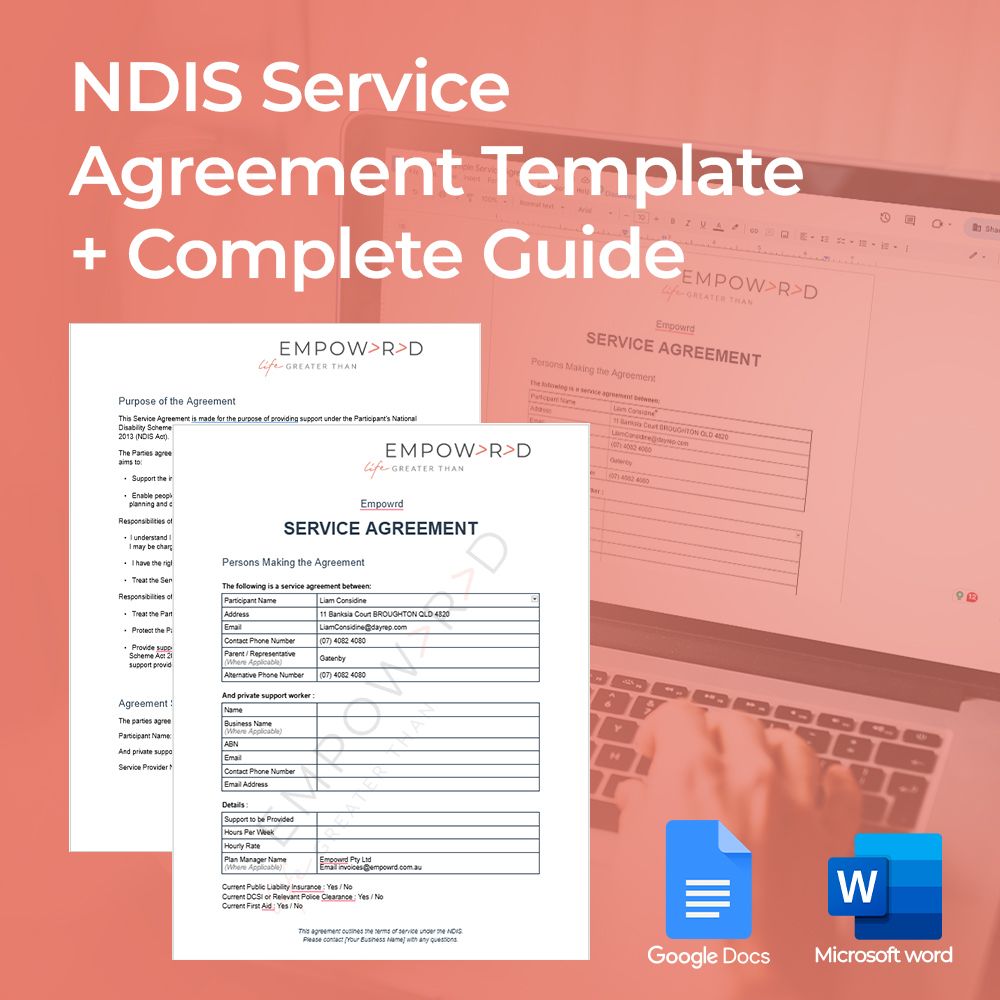
If you are an independent support worker unsure how to craft an NDIS Service Agreement template, you can download an NDIS Service Agreement Template and guide here for only $19.
Conclusion
NDIS Service Agreements are more than just paperwork. They are essential tools for building trust and accountability. A clear and comprehensive NDIS Service Agreement template will help you get the most out of your NDIS journey. Well-defined service agreements are crucial to dispute resolution and recouping any losses, providing legal protections and clear expectations for both parties.
A written service agreement is also a requirement for Specialist Disability Accommodation supports within the NDIS framework. This agreement confirms clear communication and mutual expectations between participants and providers.
Want to simplify your Service Agreement process? Empowrd offers a Service Agreement Template along with a bundle of essential NDIS independent support worker provider templates to help you get started quickly and confidently.

NDIS Plan Management and Support Coordination
At Empowrd, we are here to make your life easier. Based in Port Lincoln on the Eyre Peninsula, we offer a personal, accessible and holistic approach to NDIS Plan Management and Support Coordination.
We provide Plan Management services across Australia, assisting with financial administration, and offer Support Coordination to participants in Port Lincoln and Eyre Peninsula, connecting them with the right supports and providers. Our goal is to ensure your NDIS plan works for you, so you can focus on achieving your goals and doing what you love.
Want to Become a Support Worker?
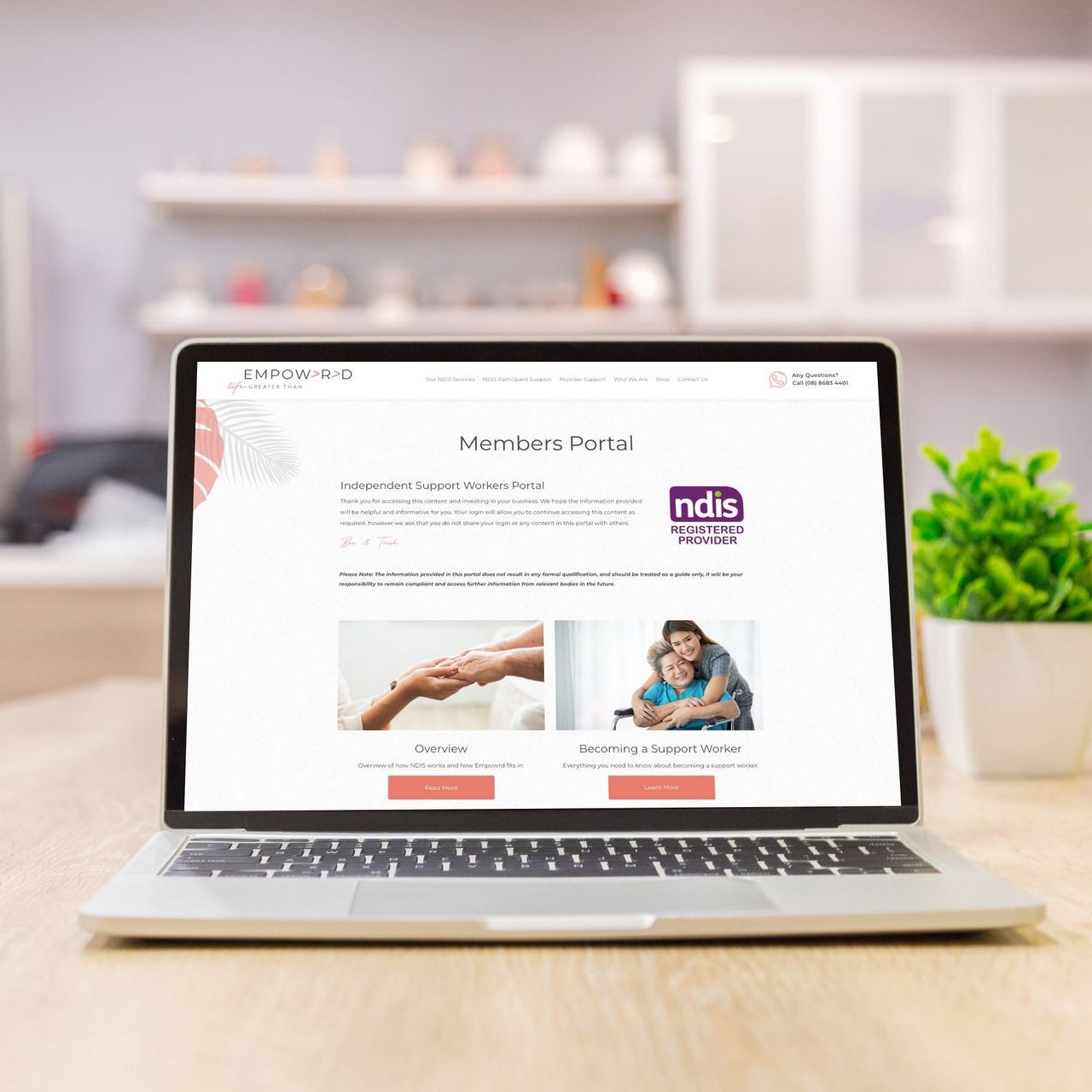
Our Independent Support Workers Education Portal provides everything you need to navigate the NDIS, find work, and confidently offer services as an Independent Support Worker. For just $65, you will gain access to comprehensive guides, essential resources, and ready-to-use templates to streamline your work.
Inside, you will find:
- A clear breakdown of how the NDIS works
- Tips for finding jobs and delivering services
- Step-by-step guidance on invoicing and support planning
- Ready-to-edit templates for quotes, service agreements, invoices, and case notes
Need just the templates? You can also purchase them separately as standalone resources.

I hope you enjoy reading this blog post.
If you are ready to be Empowrd to live your life to the fullest, let us steer you on the right path.

Fuel shortages and rising fuel costs can affect transport, appointments and access to supports for NDIS participants. Learn how Empowrd helps participants plan ahead.

From July 2026, all SIL providers must be registered with the NDIS Commission. Learn what’s changing, why it matters, and what participants should expect.

Feeling overwhelmed as a carer? Emergency respite through Carer Gateway provides temporary care so you can rest and recover. Read more.

Emergencies can happen with little warning, and for people with disability the impact can be severe. Learn how to plan ahead and protect your supports.

Learn how disability parking permits work in Australia, who is eligible, and how to apply. Includes the Australian Disability Parking Scheme (ADPS) and NDIS guidance.

NDIS Capacity Building funding supports independence and skill development. Understand the 8 Capacity Building support categories and how they align with your NDIS plan goals.

A step-by-step guide to NDIS Participant Support Plans. Learn what to include, why they matter, and how to use them to improve your support and planning.

Learn how the NDIS can support diabetes management if your disability makes self-care harder. Understand what’s funded and how to apply.

Find out if the NDIS funds gym memberships, support workers at the gym, or home exercise equipment and what to include in your planning meeting.
Be EMPOWRD to Live Your Best Life
If you’re ready to be empowered to live life on your terms, we’re here to help guide the way. At Empowrd, we offer a personal, accessible, and holistic approach to NDIS Plan Management and Support Coordination. We’ll ensure your plan works for you, allowing you to focus on your goals and the things you love most.